


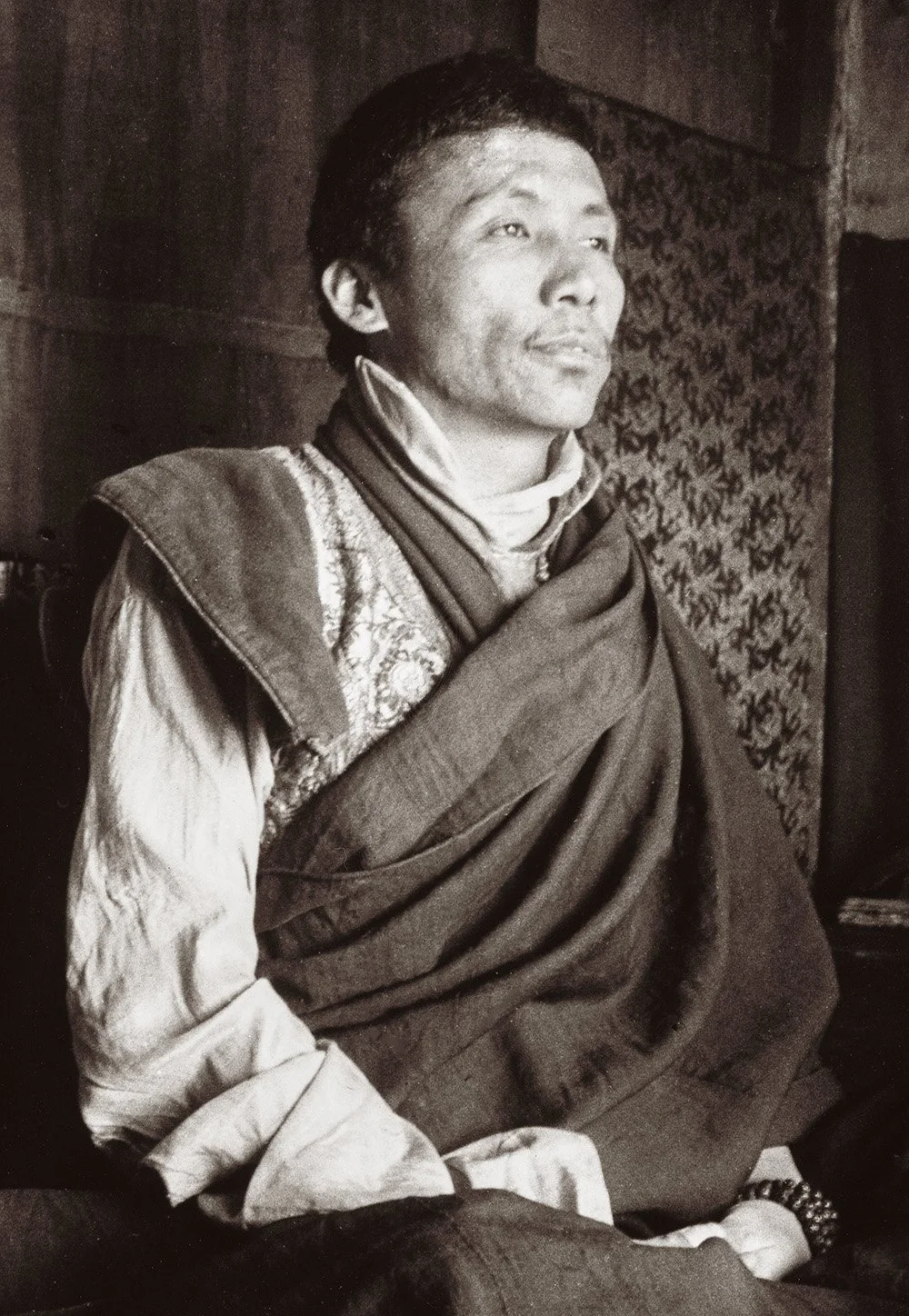
It would be twelve years before Sangharakshita was formally initiated into spiritual practices associated with Padmasambhava. In the late 1950s he met some of the greatest Tibetan teachers of the age who were then resident in Kalimpong and the surrounding region, receiving initiation and instruction from them. Among them was Dudjom Dorje Khachöd Tulku, known to us as Kachu Rinpoche. He was the Khenpo, or abbot, of the Pemayangtse monastery in Northern Sikkim. Kachu Rinpoche befriended Sangharakshita and helped him develop a connection with, and receive initiations from, the great Jamyang Khyentse Rinpoche, whom Sangharakshita regarded as his Root Guru.
Kachu Rinpoche had a remarkable range of qualities. Sangharakshita described him as being very learned, with a great gift for friendship. Indeed, Kachu Rinpoche was one of the few people who took the initiative to befriend and help him.
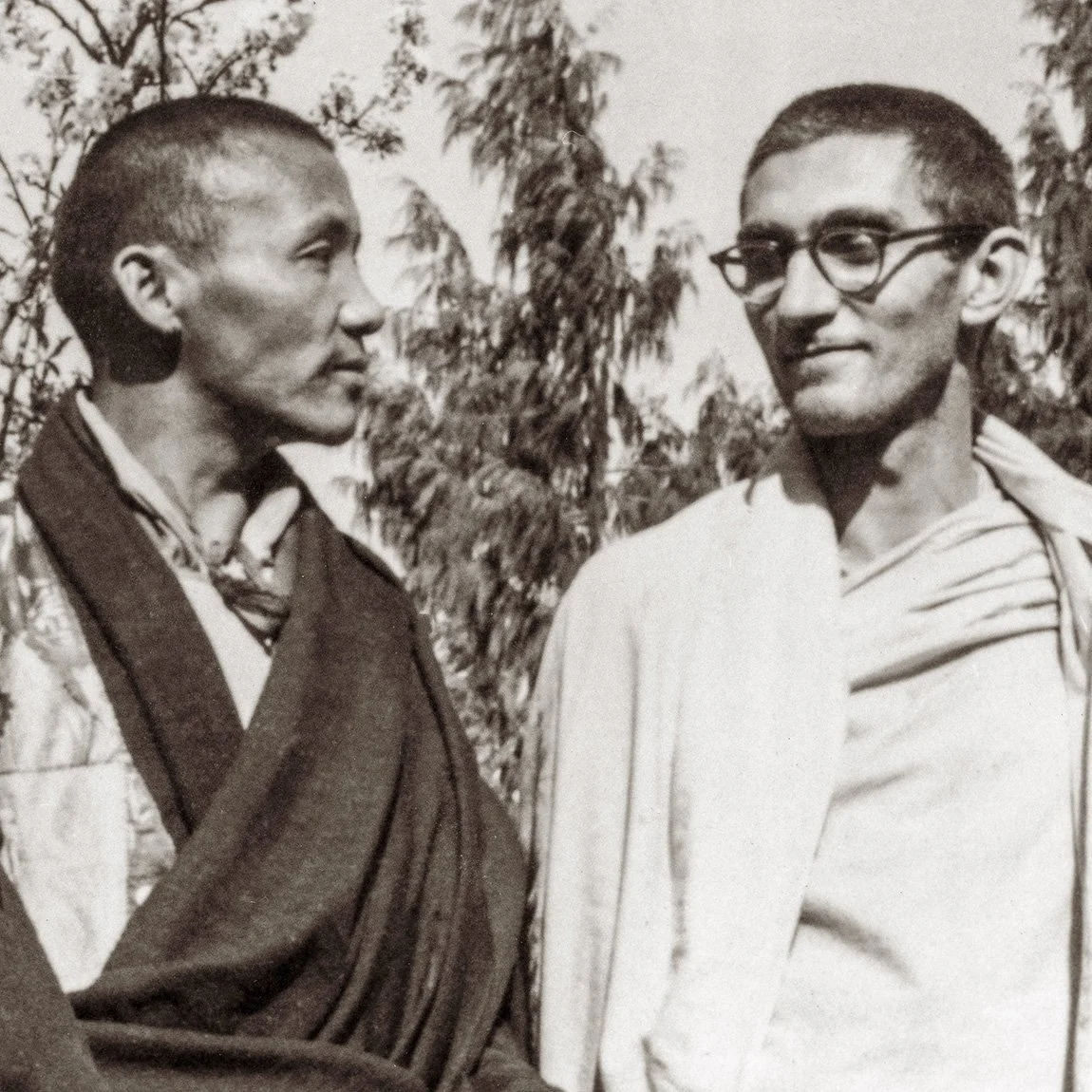
Kachu Rinpoche and Sangharakshita
He was particularly eager to help Sangharakshita make a deeper connection with Padmasambhava and the Nyingmapa tradition. He was a great meditator, as well as being an artist.
He was also a visionary, who acted on what he saw in meditation.
On one occasion, while staying at the Triyana Vardhana Vihara, the monastery on the outskirts of Kalimpong which Sangharakshita had founded, he saw in his meditation a great banner of victory on the roof of the vihara. That same day he went to the bazaar and bought all the materials needed and had the banner erected on the roof according to traditional rituals.
In October 1962, Kachu Rinpoche arrived at the Triyana Vardhana Vihara to bestow upon Sangharakshita the Padmasambhava abhiṣeka — the initiation into the meditation on Padmasambhava. He explained that Jamyang Khyentse Rinpoche had instructed him to do this, and to also give Sangharakshita the Amitāyus initiation.
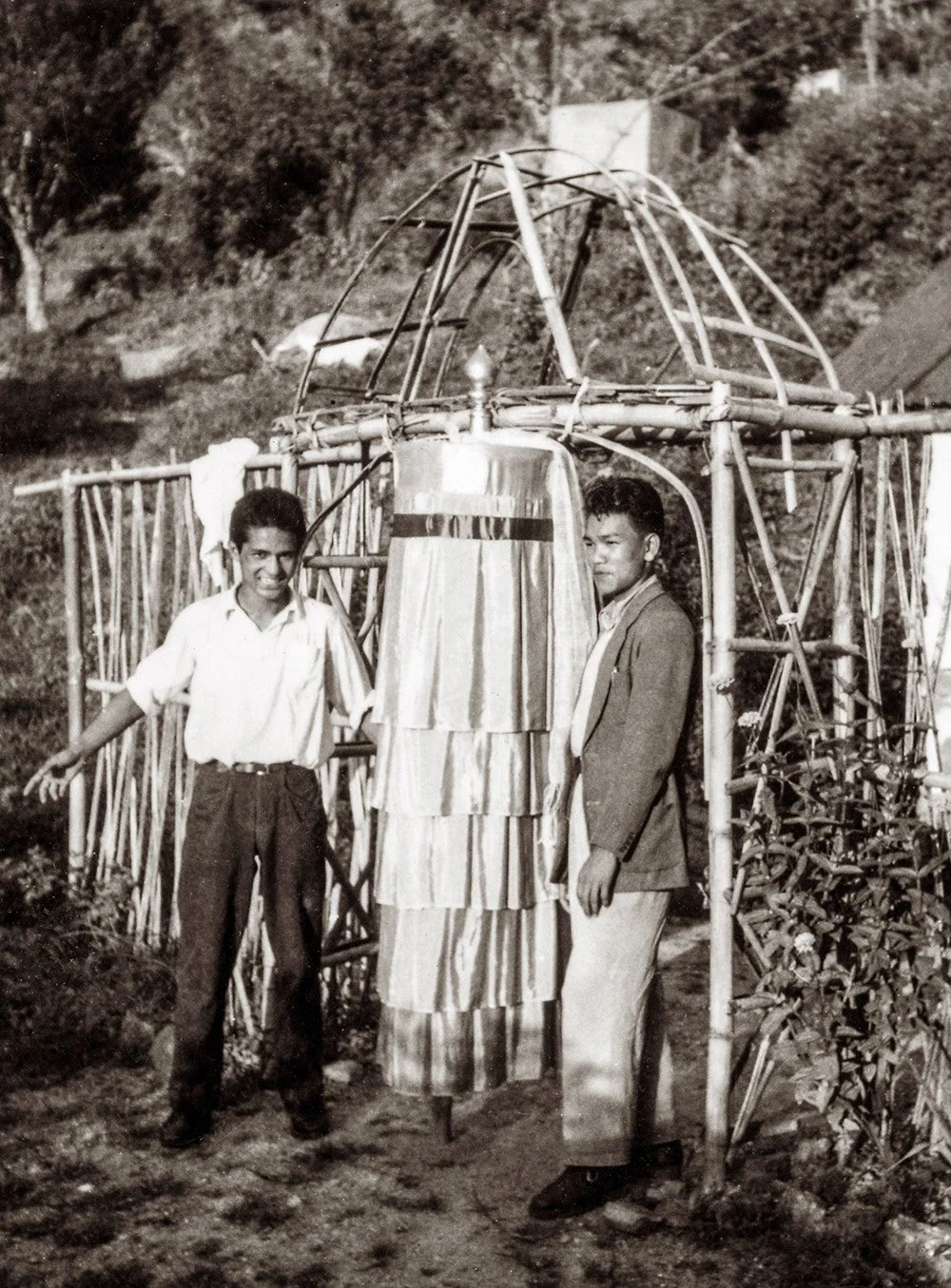
Sangharakshita's students at the Triyana Vardhana Vihara standing with the victory banner gifted by Kachu Rinpoche
Sangharakshita describes the initiation in his memoir —
“To Kachu Rimpoche the Precious Guru was not just a historical person, nor even a figure of myth and legend; he was a spiritual reality, and it was as a spiritual reality that he experienced him when he gave me the Padmasambhava abhiṣeka on 21 October 1962. By this time it was twelve years since my momentous first visit to the Tamang Buddhist Gompa in Darjeeling …. and although the Precious Guru may not have been a spiritual reality to me, as he was to Kachu Rimpoche, I was at least beginning to have a sense of his spiritual presence.
“The initiation took place in the shrine-room of the Vihara. Kachu Rimpoche came a few days earlier, bringing with him an attendant lama, as he usually did….He had arrived early, partly in order to spend time with me, and partly because a day or two would be needed to make arrangements for the ceremony. These arrangements were in the hands of the attendant lama, who spent many hours making tormas, offerings sculpted from barley-flour dough, and decorated with discs of butter, each divinity having a torma of a particular size and shape.
Kachu Rinpoche portrait
“…When finished, they were placed on a special table in front of the shrine, along with the other offerings and a variety of ritual objects…
“I cannot say that I remember much of the proceedings, which lasted two days. For most of the time I sat with closed eyes, simply allowing myself to become absorbed in the atmosphere of the occasion, an atmosphere to which the rather hoarse sound of the Rimpoche’s voice as he chanted, the occasional tinkle of his bell, and sharp scent of Tibetan incense, all contributed. I was very conscious of the fervour of the Rimpoche’s devotion to Padmasambhava, and to the spiritual tradition of which the Precious Guru was the founder... His devotion to the Precious Guru was very much in evidence when, towards the end of the second day, he explained to me how I was to visualize him in meditation. It was also at this time, I think, that he introduced me to the practice of the mūla (or ‘foundation’) yogas of the Vajrayana, and particularly to the Going for Refuge and Prostration practice and the Vajrasattva visualization and purification practice.
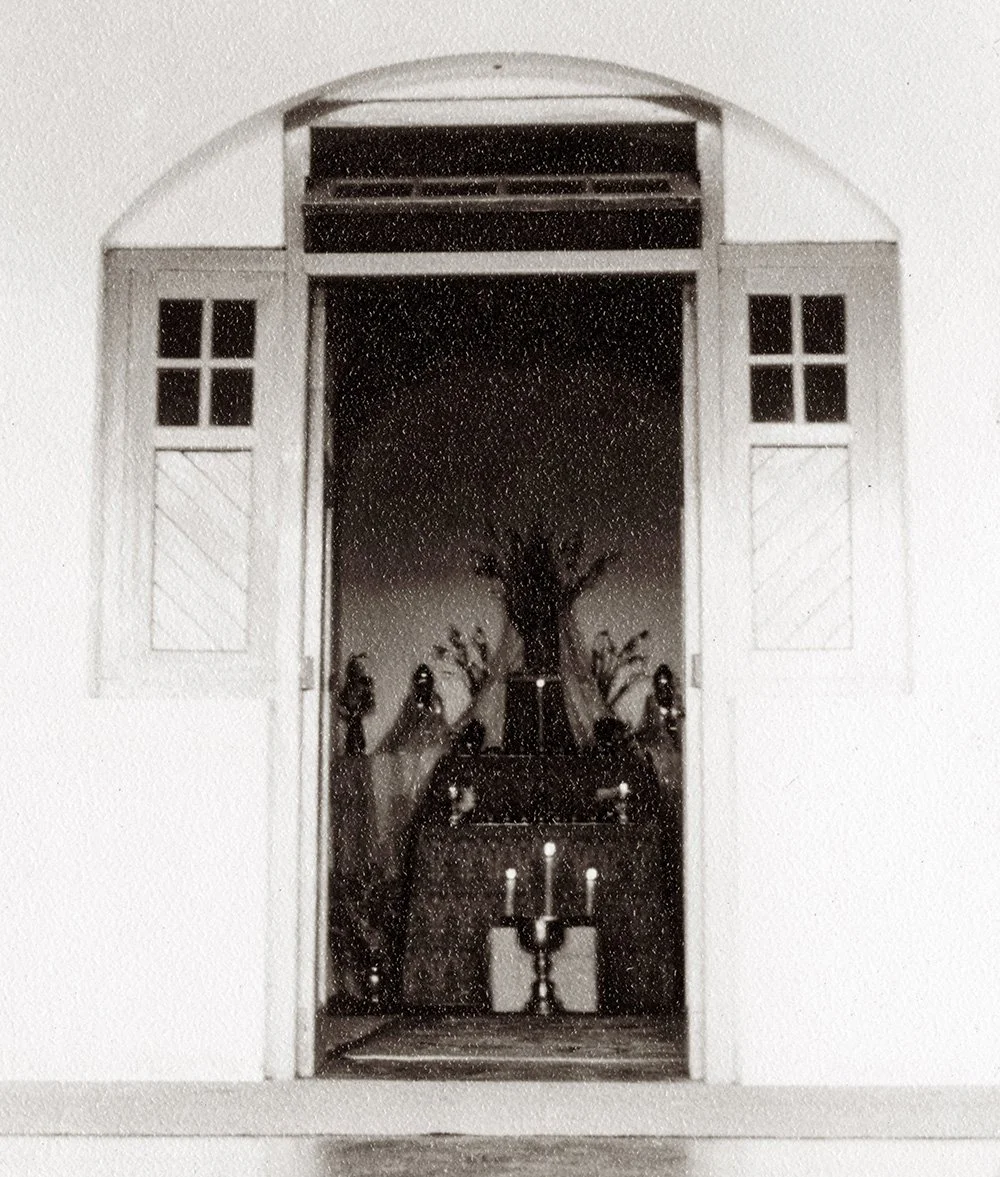
Triyana Vardana Vihara shrine room
“It certainly was at this time that the Rimpoche – now my teacher as well as my friend – bestowed on me the name Urgyen (or Orgyen), the Tibetan variant of Uddiyana, the name of the country to the north-west of India where Padmasambhava was born — according to legend — from the calyx of a lotus flower. On this account he was known as Urgyen Padmasambhava, as well as being known by many other names. I was delighted to receive the name, which served to confirm my connection with the Precious Guru, as the abhishekha itself had done, besides suggesting that my true home was in the mysterious land of Uddiyana.”
Sangharakshita, In The Sign of the Golden Wheel (CW22, pp. 472-474)
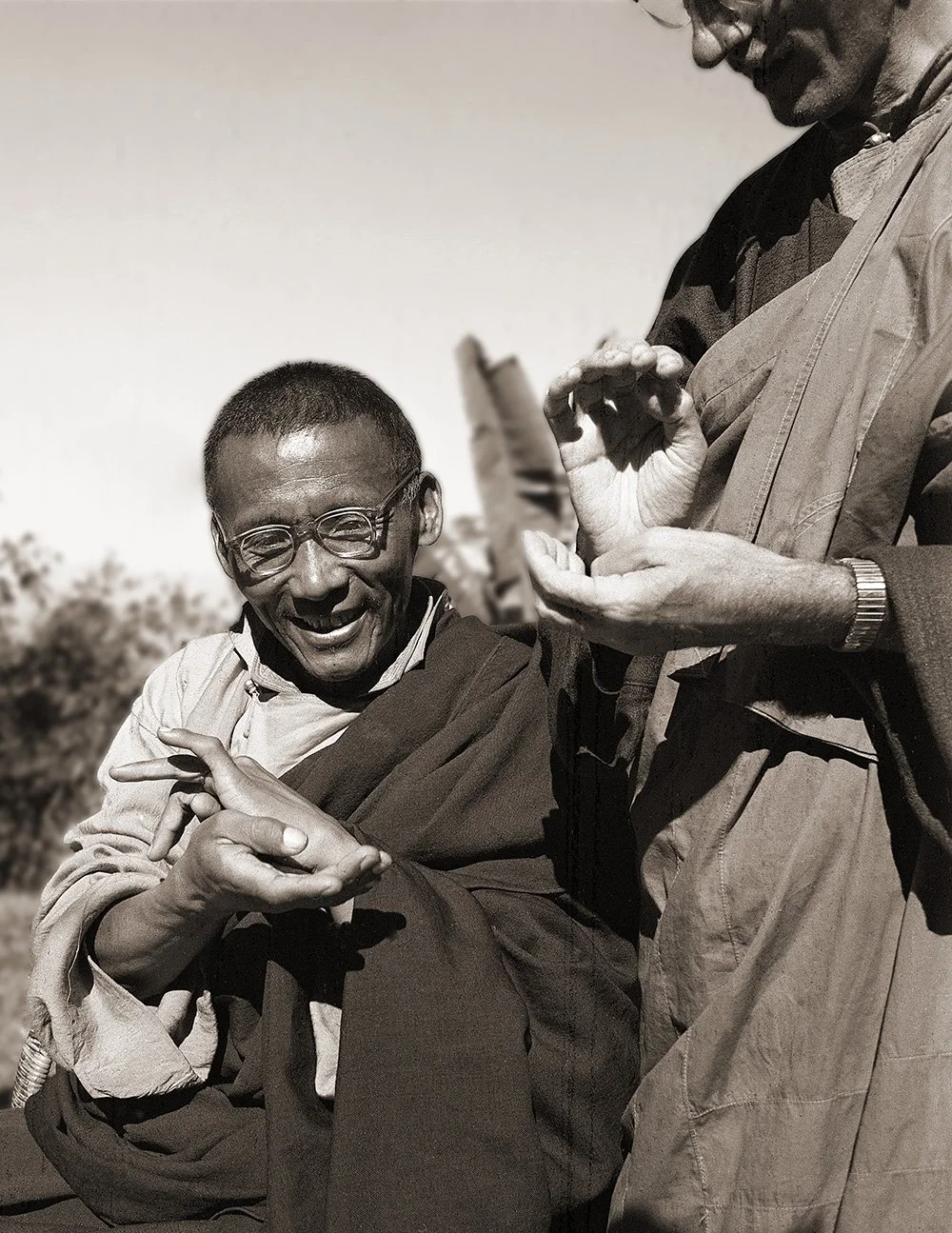
Kachu Rinpoche and Sangharakshita

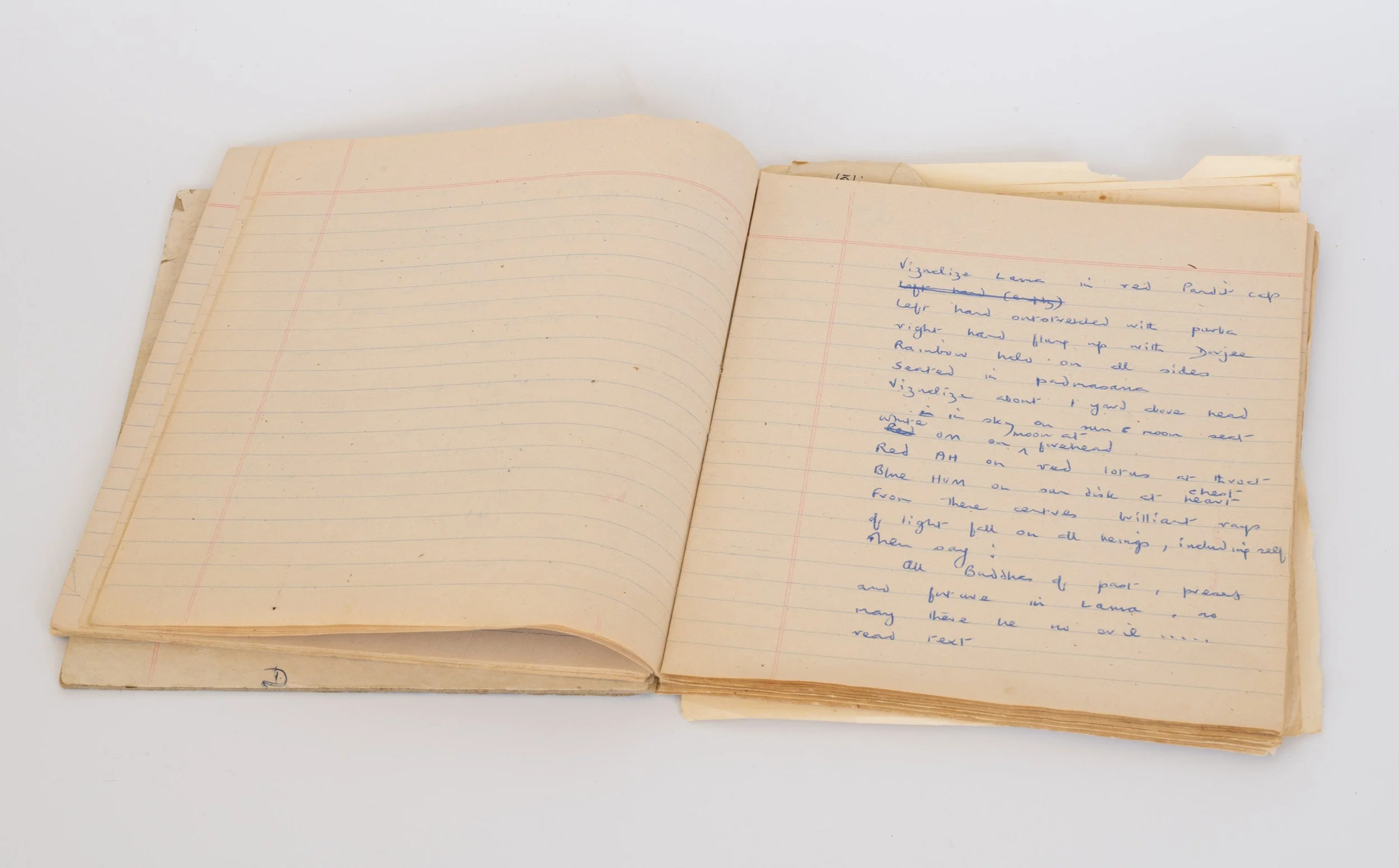
Sangharakshita’s notebook
Containing notes taken of instruction from Kachu Rinpoche after the Padmasambhava initiation in 1962.

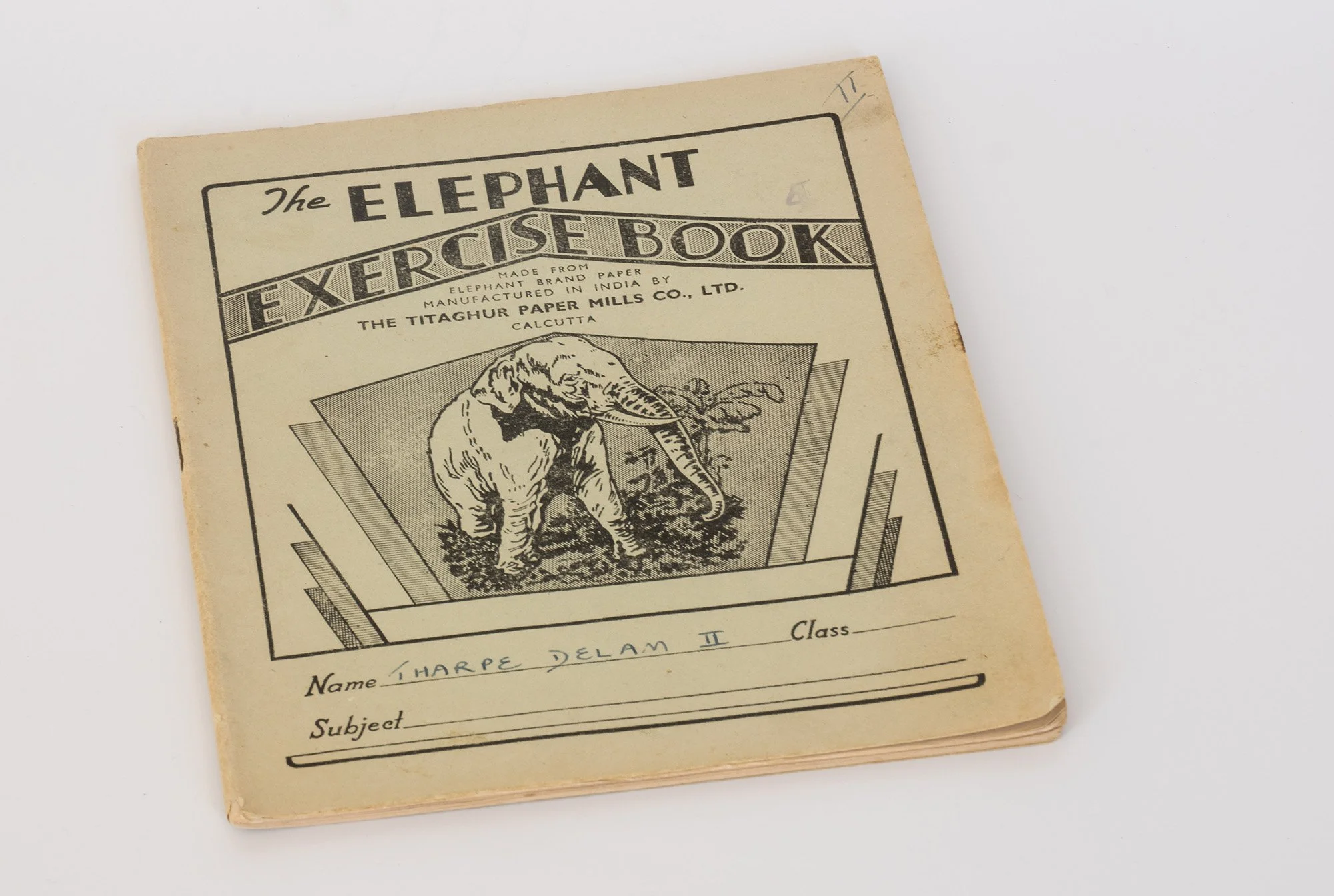
‘Elephant’ notebook II
Sangharakshita took many notes in various little Indian exercise books. This one contains a prayer to the great Guru Padmasambhava.

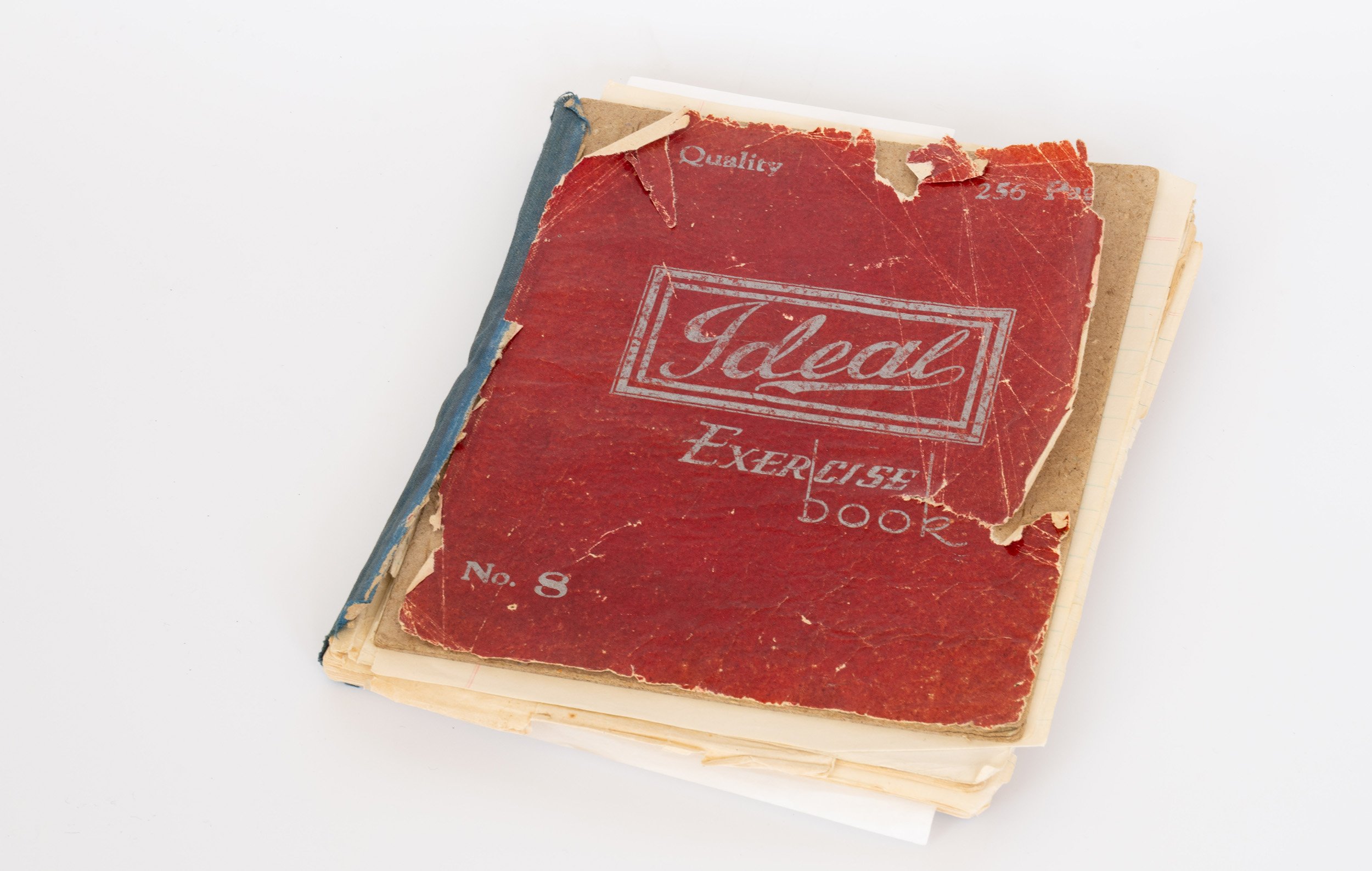
‘Ideal’ notebook
In 1966 Sangharakshita met with Kachu Rinpoche once more and received further instruction on the Padmasambhava practice.